
The Midlife Acceleration Point: Why Aging Speeds Up After 50
New research uncovers how the body’s “biological clocks” tick at different speeds—and why blood vessels may hold the key to whole-body aging.

A new study in Cell by researchers at the Chinese Academy of Sciences is making waves in the longevity field. The findings suggest that human aging accelerates sharply around age 50, when the proteins that keep our tissues and organs healthy start to decline much more quickly. The research also highlights that aging is not uniform: each organ follows its own “biological clock,” with the adrenal glands, which regulate stress hormones, showing signs of decline as early as age 30, suggesting hormonal shifts could prime or cascade systemic aging later.
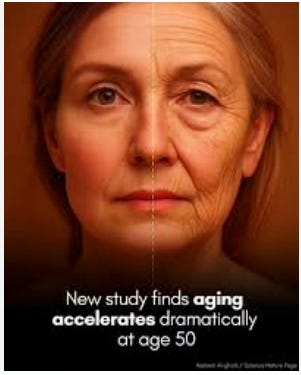
Here are the main conclusions of the study, which analyzed 516 samples1 of 13 types of human tissues from 76 organ donors aged 14 to 68 who had passed away from traumatic brain injury:
Aging is not a gradual, steady process but rather marked by waves or inflection points—one major acceleration occurs around the age of 50.
Different organs age at different rates; notably, blood vessels and the aorta2 age faster than many other tissues. Organ aging is the essence of human chronic disease.
The study identified 48 disease-associated proteins whose expression3 increases with age and is linked to diseases, including cardiovascular disease, fatty liver disease, tissue fibrosis, and liver-related tumors.
The aorta exhibits the most dramatic protein-level shifts, with some proteins in the aorta experimentally shown to promote signs of accelerated aging when introduced in animal models. These proteins likely act as systemic aging signals, propagating aging effects from one tissue to others throughout the body.
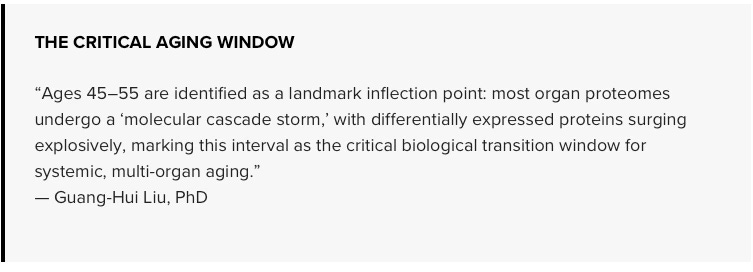
The findings reinforce the idea that midlife is a critical window for interventions aimed at slowing or modulating aging. Previous research, led by Dr. Michael Snyder at Stanford, also found two peaks in the acceleration of aging: around age 44 and again in the early 60s. This was based on multi-omic profiling (proteomic, metabolic, and immune markers) in healthy adults, indicating repeated waves of biological aging changes. Lifestyle factors like smoking and drinking can further hasten this acceleration.
Why Vascular Aging May Drive Whole-Body Aging
As mentioned earlier, the aorta exhibited the most pronounced protein changes, implicating the vascular (another word for heart) system as a potential early broadcaster of aging signals. Specifically, the protein GAS6 (Growth Arrest-Specific protein 6), through its interaction with the AXL receptor, delays cell death in vascular smooth muscle cells and cell aging via the GAS6/AXL signaling pathway. The GAS6/AXL signaling pathway helps prevent calcification, and inhibit excessive inflammation—all of which are processes that become dysregulated with age, leading to vascular stiffening4 and increased risks for atherosclerosis and other cardiovascular issues. GAS6 levels naturally decline as you age, especially past midlife. This age-related decline in GAS6 contributes to cell death in blood vessels, leading to vascular stiffening, calcification, and higher cardiovascular risk as well as reduced mitochondrial function and increased oxidative stress.
Recent studies have highlighted that vascular aging contributes to the aging of other organ systems through cross-organ interactions, including inflammation, and metabolic changes, which accelerates dysfunction in the heart, brain, kidneys, and other tissues. This suggests that interventions targeting vascular aging—such as calorie restriction, medications, or lifestyle modification—may have benefits and could theoretically slow aging markers in other organs, but direct longitudinal data demonstrating this effect are lacking.
Since the aorta is one of the first organs to accelerate aging, boosting the GAS6 pathway could help slow its “aging clock” — and in turn, slow down aging across the entire body. One approach is to increase GAS6 levels through certain medications, dietary factors, and other health interventions:
Statins: have been shown to upregulate GAS6 expression in vascular smooth muscle cells, restoring the critical GAS6/AXL survival pathway. This action helps protect vascular cells from cell death and calcification, important in maintaining vascular health with age.
Vitamin K: GAS6 is a vitamin K–dependent protein, so adequate vitamin K intake (especially from green leafy vegetables, fermented foods, and some oils) is important for its biological activity. However, there’s no direct evidence that simply increasing dietary vitamin K will raise GAS6 protein levels—only that it is required for GAS6 to function properly.
High-fat Diet: Some mouse studies suggest that high-fat diets may increase GAS6 signaling, but this is generally associated with negative metabolic outcomes like increased body fat and insulin resistance, so it is not recommended as a method to boost GAS6 for vascular health.
Besides GAS6, several other proteins (p53 chief among them) and molecular pathways are implicated in vascular aging. These proteins contribute to endothelial dysfunction, arterial stiffness, zombie cells5, and chronic inflammation, which are hallmarks of vascular aging. The idea that our cells lose the ability to maintain a healthy and functional collection of proteins is a cornerstone of modern aging theory. The accumulation of misfolded proteins, like amyloids, is the classic example, best known in neurodegenerative diseases like Alzheimer’s disease. The study’s finding of widespread amyloid accumulation across many tissues confirms that this isn’t just a brain-specific problem but a systemic feature of aging.
Interventions targeting these proteins and pathways include calorie restriction, exercise, and therapeutics such as ACE inhibitors, angiotensin receptor blockers, and statins. Experimental therapies also include reservatrol and rapamycin. Lifestyle modifications, including dietary control and regular physical activity, are recommended adjuncts to therapeutic approaches. No single intervention has been shown to fully reverse vascular aging, but combination strategies targeting multiple pathways—especially those modulating cellular senescence, oxidative stress, and inflammation—show promise in preclinical and early clinical studies. While aging accelerates midlife, evidence underscores that healthy habits—exercise, balanced diet, sleep, mental wellness—can slow the pace, especially when adopted early. This growing body of science emphasizes the importance of monitoring and potentially intervening in health around these key ages to promote healthier aging.
Takeaway: A landmark study in Cell finds that aging doesn’t unfold gradually but accelerates sharply around age 50, when key protective proteins decline. Each organ follows its own clock—blood vessels and the aorta aging faster than most, while hormonal shifts begin as early as the 30s. Researchers identified proteins, including GAS6, that may act as systemic aging signals, driving dysfunction across organs. The findings spotlight vascular health as a central target for interventions to slow aging and extend healthspan.
The tissue samples included cardiovascular, digestive, respiratory, endocrine, and musculoskeletal samples, as well as immune system, skin, and blood samples.
The main artery of the body, supplying oxygenated blood to the circulatory system. In humans it passes over the heart from the left ventricle and runs down in front of the backbone.
Protein expression is the process of cells producing proteins from the genetic information encoded in their DNA. As fundamental building blocks of life, proteins perform various functions within cells.
As you grow older, plaque buildup narrows your arteries and makes them stiffer. These changes make it harder for blood to flow through them.
The fancy term is cellular senescence.
Nicely written and researched article @Ram
Excellent, informative article. Well done!